
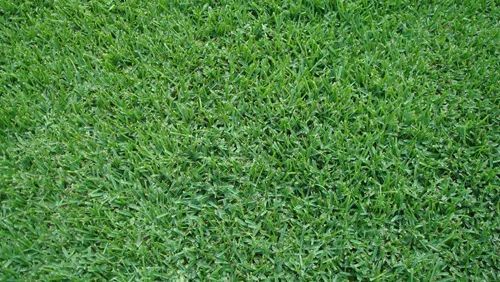
Shade-Tolerant Sod With Proven Coverage
Palmetto St. Augustine sod in Unadilla for properties where shade and heat prevent other varieties from establishing fully
A lawn with significant tree canopy or structures casting afternoon shade will thin and discolor under varieties that need full sun, and replacing failed sod is a direct cost that proper variety selection avoids. The Sod Source grows Palmetto St. Augustine on its 400-acre farm in Unadilla, Georgia, and delivers it fresh on the day of harvest. Palmetto is a patented cultivar and has sold more units than any other St. Augustine variety—a record that reflects consistent performance across the range of conditions where it gets planted.
Before laying Palmetto, the farm recommends having your soil tested for pH and nutrient levels, because this variety performs best in neutral to slightly alkaline soil. The fertilizer schedule is specific: a complete 10-10-10 fertilizer applied in spring and fall at 10 pounds per 1,000 square feet, plus three nitrogen-only summer applications at 1 pound of actual nitrogen per 1,000 square feet, which works out to roughly 5 pounds of fertilizer per application depending on the product. Mowing height should stay between 1.5 and 2.5 inches. Following that protocol produces a dense, even stand that crowds out weeds without relying on herbicide programs.
Arrange a pickup at the Unadilla farm or schedule delivery by calling or texting (478) 230-3569—the farm cuts your order fresh and places pallets on site where your crew or installer needs them.
How Palmetto Establishes and What You Will See
Palmetto St. Augustine sod is cut from the field and loaded the same day it is delivered, which preserves root moisture and reduces transplant shock compared to material that moves through a distribution warehouse. The root mat arrives intact, and when laid on properly prepared, pH-corrected soil, the turf begins anchoring within the first week. At that stage the grass should not be mowed; letting the roots grip the soil undisturbed is what determines how evenly the stand fills in.
Once established, a Palmetto lawn holds its color through the shaded portions of the yard where other grasses would show bare patches or chlorotic yellowing. Properties in areas like Byron and Fort Valley, where large established oaks are common on older residential lots, regularly see Palmetto outperform Bermuda and even zoysia varieties in those shaded corridors. The visible result is a consistent color and texture across the whole lawn rather than a patchwork of green in sun and thin in shade.
The Sod Source accepts orders of any size, from individual rolls for a repair to full-pallet orders for a new installation, and cash discounts are available for cash payment. Because the farm grows and sells directly, there is no markup layer between the field price and what you pay.
Characteristics of Palmetto St. Augustine® Sod
| Hot Weather Tolerance: | Excellent |
|---|---|
| Shade Tolerance: | Excellent |
| Wear Resistance: | Good |
| Salt Tolerance: | Good |
| Injury Recovery: | Good |
| Winter Color: | Dormant to Semi-Dormant |
| Mowing Height: | 1.5 to 2.5 inches |
General Maintenance
Proper lawn maintenance techniques are essential to avoiding growth issues and weed invasions. Regularly fertilizing your lawn preserves the health of your lawn and reduces vulnerability to insects, disease and weather. Before fertilizing your lawn, we recommend performing a soil test, which will tell you key information about the health of your soil — including the pH and nutrient levels. Once you have your soil test results, you will be able to determine the best fertilizer to match the nutrients your lawn requires.
SOIL AND FERTILIZER
Palmetto St. Augustine sod prefers neutral to alkaline soil. Applying fertilizer twice a year, spring and fall, with a complete fertilizer (10-10-10) will provide a nutrient-rich and pH-perfect environment for your lawn to grow.
As professional sod growers in Georgia, we advise using 10 pounds per 1,000 feet on each application. Apply three additional applications of nitrogen only during the summer months at a rate of 1 pound of nitrogen per 1,000 feet (this will be around 5 pounds of the actual fertilizer).
FUNGICIDES
Regular use of fungicides helps control and inhibit grass diseases, keeping your Palmetto St. Augustine sod healthy and strong. Use Daconil to prevent disease monthly.
WATERING
How often should I mow and water St. Augustine Palmetto Grass?
Finding the right balance between mowing and watering your Palmetto St. Augustine sod in Georgia is the best way to maintain a rich and healthy-looking lawn throughout the year.
- During sod establishment, water every day so that the soil is soaked 3-4 inches deep. Do not allow it to wilt. An additional watering might be needed. The primary watering should be done between 1 PM and 5 PM.
- Established sod should be watered every day during the hot months, and about every 4-7 days during cooler months. However, it is also important not to overwater the grass. Depending on the time of year, rainfall should also be taken into consideration when deciding how often to water your lawn.
MOWING
When mowing your lawn during the summer, it is recommended to cut no more than ⅓ of the leaf blade. This prevents the grass from stressing and going brown. Taller blades also allow the root system to stay cooler and retain more moisture, which is necessary for survival during hotter months.
Implementing these suggested maintenance practices consistently and correctly will result in a greener, healthier lawn. St. Augustine Palmetto is a convenient and practical choice when looking to buy sod near you. With so many advantages, it’s little surprise that it’s also our most requested variety.
SOIL AND FERTILIZER
FUNGICIDES
WATERING
MOWING
Palmetto St. Augustine sod prefers neutral to alkaline soil. Applying fertilizer twice a year, spring and fall, with a complete fertilizer (10-10-10) will provide a nutrient-rich and pH-perfect environment for your lawn to grow.
As professional sod growers in Georgia, we advise using 10 pounds per 1,000 feet on each application. Apply three additional applications of nitrogen only during the summer months at a rate of 1 pound of nitrogen per 1,000 feet (this will be around 5 pounds of the actual fertilizer).
Regular use of fungicides helps control and inhibit grass diseases, keeping your Palmetto St. Augustine sod healthy and strong. Use Daconil to prevent disease monthly.
Finding the right balance between mowing and watering your Palmetto St. Augustine sod in Georgia is the best way to maintain a rich and healthy-looking lawn throughout the year.
- During sod establishment, water every day so that the soil is soaked 3-4 inches deep. Do not allow it to wilt. An additional watering might be needed. The primary watering should be done between 1 PM and 5 PM.
- Established sod should be watered every day during the hot months, and about every 4-7 days during cooler months. However, it is also important not to overwater the grass. Depending on the time of year, rainfall should also be taken into consideration when deciding how often to water your lawn.
How often should I mow and water St. Augustine Palmetto Grass?
When mowing your lawn during the summer, it is recommended to cut no more than ⅓ of the leaf blade. This prevents the grass from stressing and going brown. Taller blades also allow the root system to stay cooler and retain more moisture, which is necessary for survival during hotter months.
Implementing these suggested maintenance practices consistently and correctly will result in a greener, healthier lawn. St. Augustine Palmetto is a convenient and practical choice when looking to buy sod near you. With so many advantages, it’s little surprise that it’s also our most requested variety.
What Buyers Ask About Palmetto St. Augustine
The questions below address the practical details of establishing and maintaining Palmetto St. Augustine, including the soil preparation steps, mowing protocol, and what to expect from the sod during the first few weeks after installation.
What soil preparation should happen before Palmetto St. Augustine is laid?
A soil pH test should be completed first, because Palmetto prefers neutral to slightly alkaline conditions—if the soil is acidic, lime should be incorporated and given time to adjust before the sod goes down.
How is the mowing height for Palmetto different from other varieties?
Palmetto is maintained at 1.5 to 2.5 inches, which is higher than Bermuda's typical cut; mowing below that range stresses the turf and reduces its shade performance over time.
Why does buying sod direct from the farm matter for establishment success?
Fresh-cut sod has an intact root mat and has not sat in a staging yard, so it roots faster and shows less transplant shock than material that has been warehoused for even a day or two between harvest and delivery.
How does the fertilizer schedule for Palmetto differ from a standard lawn program?
Palmetto uses a structured two-season approach—a complete 10-10-10 fertilizer in spring and fall at 10 pounds per 1,000 square feet, combined with three summer nitrogen-only applications at 1 pound of actual nitrogen per 1,000 square feet—rather than a single annual application.
When should you first mow Palmetto after installation?
Wait until the sod has rooted firmly enough that you cannot lift a corner by hand—this typically means holding off for at least two to three weeks—because mowing before roots anchor pulls the turf loose and disrupts establishment.
The Sod Source also grows and delivers Palmetto St. Augustine sod to Perry, Fort Valley, Centerville, Warner Robins, and Byron. To confirm current availability and place an order, contact The Sod Source at (478) 230-3569.